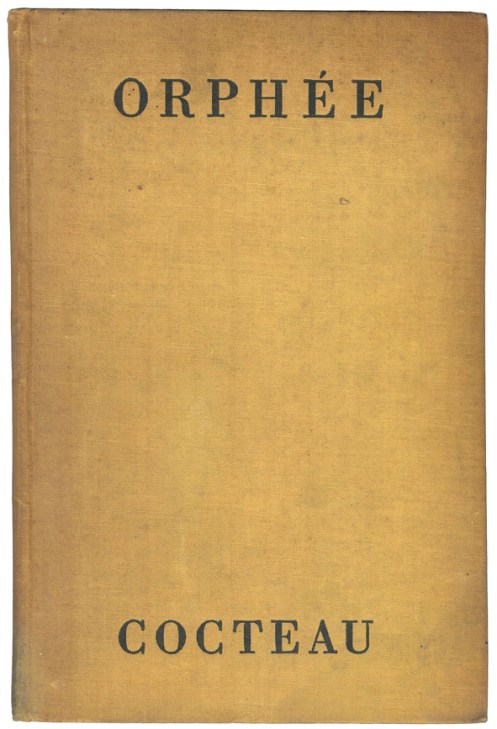
My dad’s copy of “Orphée” by Jean Cocteau – special thanks to Colin Banks
See every single published version of “Rorschach Audio”

“Open your ears, for which of you will stop
The vent of hearing when loud Rumour speaks?
I, from the orient to the drooping west,
Making the wind my post-horse, still unfold
The acts commenced on this ball of earth.
Upon my tongues continual slanders ride,
The which in every language I pronounce,
Stuffing the ears of men with false reports.
I speak of peace while covert enmity
Under the smile of safety wounds the world…”
Henry IV, Part 2, c.1596
See “Rorschach Audio” book pages 23 to 26, 29, 49 to 51, 117 and 132 to 133
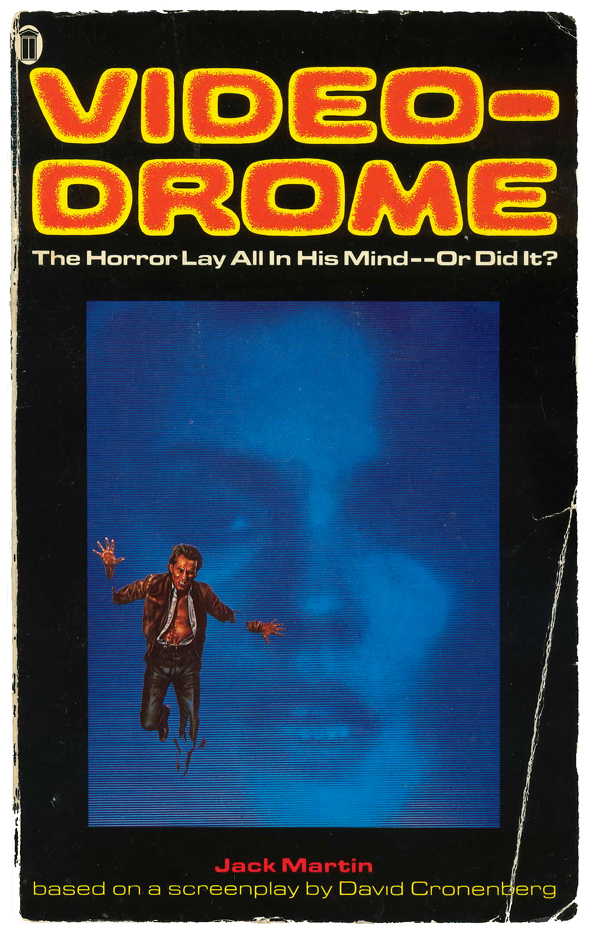
“Bear with me. You might find this interesting.” He flashed Max an expression of camaraderie. “We were doing some very, very sophisticated zero light weapons scopes for military application. Developed something called an image accumulator. It used a system of vidicon tubes, a closed circuit where we amplified indistinct signals from tube to tube, to create images where the physics books said there wasn’t enough light for an image to exist. We made a kind of helmet with conical fibre optics – didn’t want to get into lasers – and you know? The damnedest thing happened to some of the boys who were testing her in the field… Under simulated combat conditions, the boys who used her began to hallucinate. Images began to appear that weren’t really there – and the images lasted for hours after they’d stopped wearing her. Took us quite a while to figure out that the boys were starting to project their own images through the optical accumulator, images that came from their brains and ended-up exciting the vidicon mosaic like an electron gun. Video hallucinations, Max, that we have recorded on tape.”
David Cronenberg & Jack Martin, “Videodrome”, New English Library 1983
See “Rorschach Audio” book page 124

Les Amis de l’A-bai-ssés (Abaissés, meaning, in effect, the Parisian under-class) – the sound also (according to critic Katherine Grossman) implies “The Abyss”
See “Rorschach Audio” book pages 125, 126 & 127
Possibly the best sound artist ever? And, with regard to relationships between illusions of sound and emotional themes explored by “Rorschach Audio” and “Shadows in Dream Time” etc, check out Nina Conti’s extraordinary “Her Master’s Voice” DVD –
http://www.ninaconti.co.uk/store/
See “Rorschach Audio” book pages 103 to 104
See “Rorschach Audio” book page 163, and William Hogarth “Satire on False Perspective” and Disinformation “The Analysis of Beauty” (both below)
Thanks to Guy Birkin for the heads-up, check-out his “Aesthetic Complexity” blog –

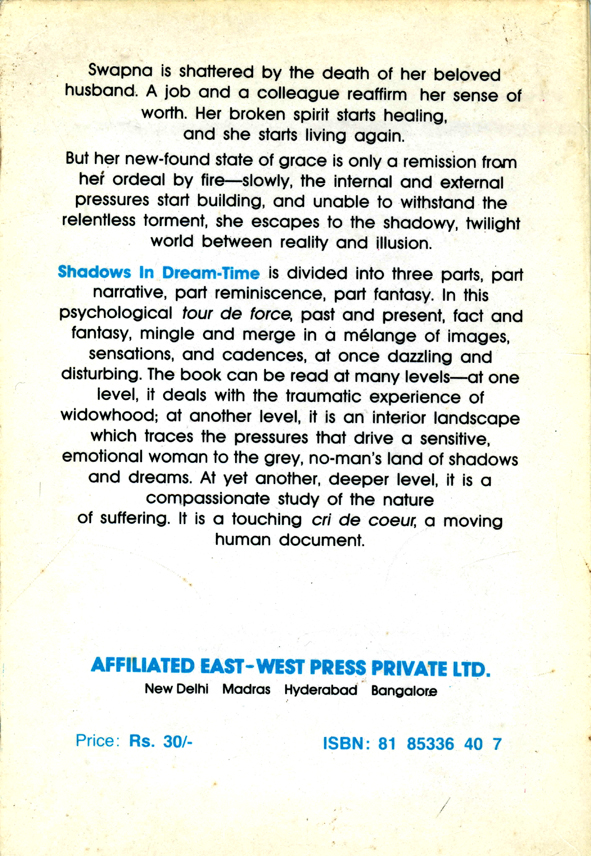
Suffice to say “Shadows in Dream Time” comes very highly recommended – the relationship between illusion, bereavement and sound is central to the novel, and the title seems to contain or allude to something of a play on words, as the name of the book’s main character, Swapna, refers to a Hindu discipline of dreaming or “dream-work”, the name of her sister Chāyā (or Chhaya) means “shadow” or “shade”, eg – “Chaya, Chaya, Chaya. Life revolved around her these days. She was the reality, while Swapna had become the shadow”, while her daughter’s name Maya refers to illusion, which is referred to (by Wikipedia) as being understood in the sense that individuals “do not experience the environment itself but rather a projection of it” (see material about JG Ballard and EH Gombrich etc in the “Rorschach Audio” book, and posts below). Interestingly, though possibly coincidentally, given the sound-imagery that runs through “Shadows in Dream Time”, the Nilgiri Mountain Railway – the steam railway – which (still) serves the town of Ooty where Indu K Mallah lives, provided the location for composer A.R. Rahman’s “Chaiyya Chaiyya” in the film “Dil-Se” (see previous post). Where “Shadows in Dream Time” describes the sound of trains as evoking words for instance (openly) quoted from Khalil Gibran, in “Chaiyya Chaiyya” the chuffing of the train seems to have suggested both the rhythm of the music and a lyrical chant, which is apparently based on lyrics by the Sufi humanist Bulleh Shah.
See “Rorschach Audio” book pages 133, 139 and 177.
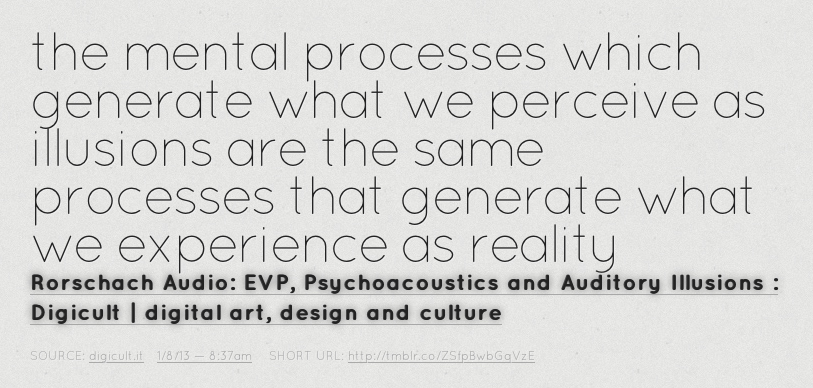
Graphic from the Apollonius of Perga website –
http://www.apolloniusofperga.tumblr.com
Quoting from the Digicult article – tinyurl.com/48y5zsdh
 Disinformation + Rorschach Audio