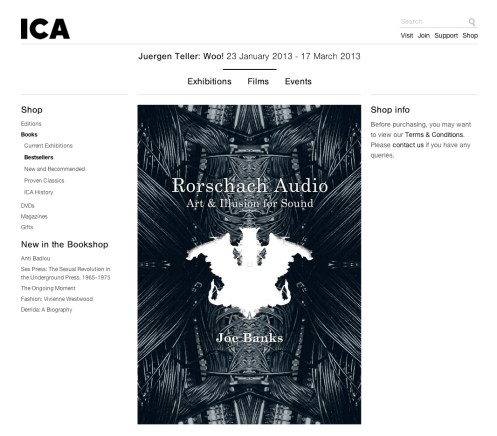

“Honour eternal is due to the brave and noble of people of Spain, worthy of better rulers and better fortune! And now that the jobs and intrigues of their juntas, the misconduct and incapacity of their generals, are sinking into the deserved obscurity of oblivion, the national resistance rises nobly out of the ridiculous details… The resistance was indeed wild, disorganised, undisciplined… but it held out to Europe an example…” – Richard Ford “Handbook for Travellers in Spain” 1845
Banned in Spain for over 30 years! See “Rorschach Audio” book page 52, and “Assigned to Listen” post below.

The first “Rorschach Audio” presentation of 2013 is confirmed for Northampton’s (literally) Legendary Labour Club, evening of March 5th – come along for mind-scrambling audio-visual illusions and electromagnetic hauntology. After the audience’s perceptual software’s been suitably re-wired, the evening climaxes with Strange Attractor & Disinformation discharging 30kV shocks into anything, or anyone, that doesn’t make it to the Fire Exit fast enough… live “Circuit Blasting” (which is “a bit like Circuit Bending, but alot less subtle”). Bring your friends.
Legendary Labour Club
95 Charles Street
Northampton NN1 3BG
Doors 7pm, £2
http://legendarylabourclub.com/blank-stares-cricket-claps/
http://legendarylabourclub.com/where-to-find-us/
“… it seems unlikely that the Conservative Club on Whitworth Road will be promoting a visit from Bilge Pump, Gay Against You or Drum Eyes anytime soon”.
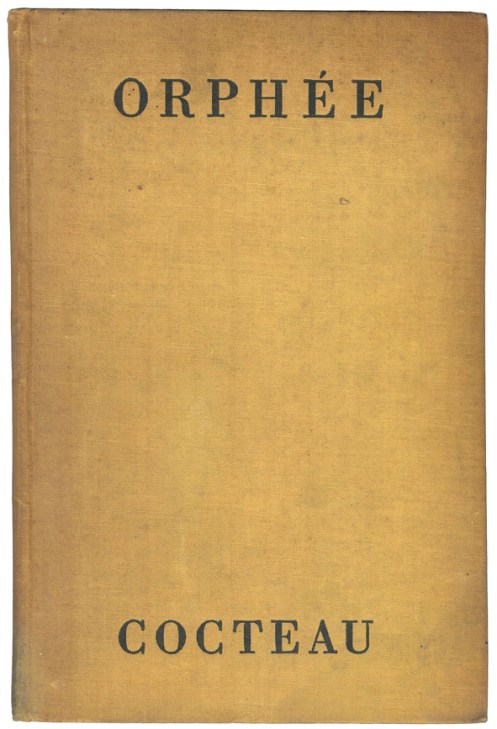
My dad’s copy of “Orphée” by Jean Cocteau – special thanks to Colin Banks
See every single published version of “Rorschach Audio”

“Open your ears, for which of you will stop
The vent of hearing when loud Rumour speaks?
I, from the orient to the drooping west,
Making the wind my post-horse, still unfold
The acts commenced on this ball of earth.
Upon my tongues continual slanders ride,
The which in every language I pronounce,
Stuffing the ears of men with false reports.
I speak of peace while covert enmity
Under the smile of safety wounds the world…”
Henry IV, Part 2, c.1596
See “Rorschach Audio” book pages 23 to 26, 29, 49 to 51, 117 and 132 to 133
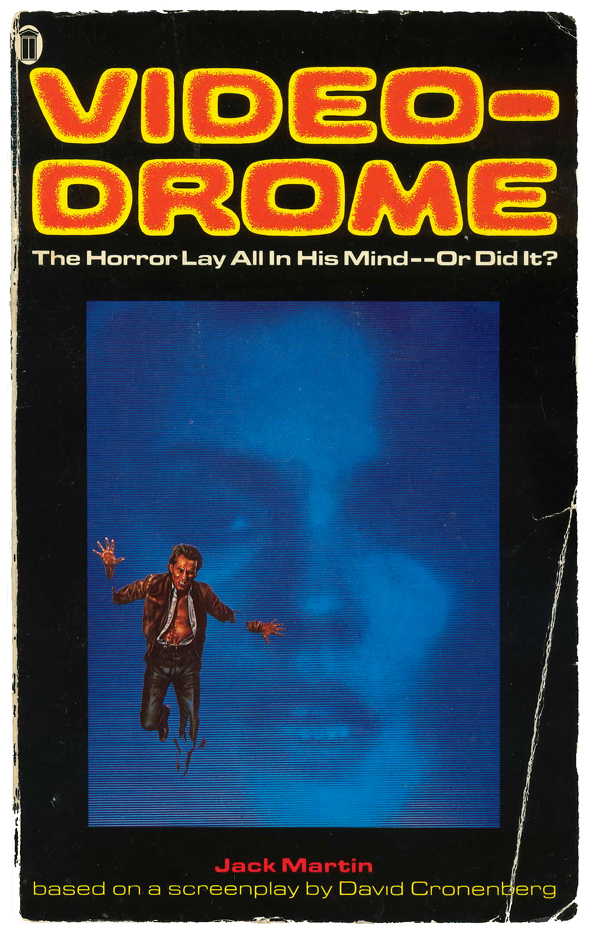
“Bear with me. You might find this interesting.” He flashed Max an expression of camaraderie. “We were doing some very, very sophisticated zero light weapons scopes for military application. Developed something called an image accumulator. It used a system of vidicon tubes, a closed circuit where we amplified indistinct signals from tube to tube, to create images where the physics books said there wasn’t enough light for an image to exist. We made a kind of helmet with conical fibre optics – didn’t want to get into lasers – and you know? The damnedest thing happened to some of the boys who were testing her in the field… Under simulated combat conditions, the boys who used her began to hallucinate. Images began to appear that weren’t really there – and the images lasted for hours after they’d stopped wearing her. Took us quite a while to figure out that the boys were starting to project their own images through the optical accumulator, images that came from their brains and ended-up exciting the vidicon mosaic like an electron gun. Video hallucinations, Max, that we have recorded on tape.”
David Cronenberg & Jack Martin, “Videodrome”, New English Library 1983
See “Rorschach Audio” book page 124

Les Amis de l’A-bai-ssés (Abaissés, meaning, in effect, the Parisian under-class) – the sound also (according to critic Katherine Grossman) implies “The Abyss”
See “Rorschach Audio” book pages 125, 126 & 127
Possibly the best sound artist ever? And, with regard to relationships between illusions of sound and emotional themes explored by “Rorschach Audio” and “Shadows in Dream Time” etc, check out Nina Conti’s extraordinary “Her Master’s Voice” DVD –
http://www.ninaconti.co.uk/store/
See “Rorschach Audio” book pages 103 to 104
 Disinformation + Rorschach Audio