180 The Strand, 4’33”, A Courtroom is not a Gallery, A Human History of Sound and Listening, A Scientific Odyssey of Sound, A Spectre, A Spectre - Haunting, A World View, Aaron Mahnke, Aby Warburg, Acoustic Inkblot, Acoustic Justice, Acoustic Rorschach, AHRC, Air Traffic Control, Alex Peverett, Alison Carmichael, All Literature and Poetry are Forms of Audio Art, All Literature and Poetry are Forms of Sonic Art, All Literature and Poetry are Forms of Sound Art, Alva Noto, Anna Santomauro, AnOther Magazine, AnOtherMag, Apophenia, Apophenia Art, Apophenia Artwork, Apophenia Exhibition, Apophenia Research, Archival sonics, Archive 81, Archive81, Aristotle, Aristotle Poetics, Aristotle’s Poetics, Arrival, Art, Art & Illusion, Art & Illusion for Sound, Art and Speech, Art Center, Art Foundation, Art Institute of Chicago, Art or Sound, Art Research, Artefact, Arteleku, Artificial Language, Artist, Artistic Research, Arts & Humanities Research Council, Arts Catalyst, Arts Catalyst 2026, Arts Council, Arts Council National Lottery, Arts Research, Assetto, Assetto Fellowship, Assetto Fellowships, Assetto Warburg, Atlanta Eke, Audio, Audio Apophenia, Audio Art, Audio Ink Blot, Audio Ink Blot Test, Audio Inkblot, Audio Inkblot Test, Audio Projection, Audio Projections, Audio Projective Test, Audio Projective Tests, Audio Rorschach, Audio Rorschach Test, Audio Summator, Audio Tape, Audio Tape Recorder, Audiolab, Auditory Apophenia, Auditory Hallucinations, Auditory Illusions, Auditory Inkblot, Auditory Inkblot Test, Auditory Phantasm, Auditory Phantasmic Presence, Auditory Projection, Auditory Projections, Auditory Projective Test, Auditory Projective Tests, Auditory Rorschach, Auditory Rorschach Test, Auditory Summator, Aura Satz, Aura Satz Spell Cards, Aural Ink Blot, Aural Ink Blot Test, Aural Inkblot, Aural Inkblot Test, Aural Rorschach, Aural Rorschach Test, Austin Osman Spare, Auto Italia, Auto Italia South East, Édouard-Léon Scott de Martinville, B.F. Skinner, Background Noise, Bafic, Barbara Ellison, Bárbara Rodríguez Muñoz, BBC, BBC Monitoring, BBC Monitoring Service, BBC Radio, BBC Radio 4, BBC Radio 4 Extra, BBC Television, BBC TV, Beulah Ezeugo, Bibliothek Warburg, Bilderatlas Mnemosyne, Bill Sherman, Black Atlas, Black Tapes, Black Tapes Podcast, Bodies of Sound, BPS, British Library, British Psychological Society, C. Spencer Yeh, Candida Höfer, Carsten Nicolai, Casino Luxembourg, Cassette Culture, Catalyst Arts, CCA, Centre for Contemporary Arts, Centre for Radiophonic Studies, Centre Point, Centro di Ricerca per la Radiofonia, Channel Somerset House, Charing Cross Road, Charlie McDowell, Chateau Denmark, Chelsea College of Arts, Chiang Fengnan, China Mieville, Choral Sculpture, Chris Gladwin, Claire Elliott, Claudia Lastra, Cocktail Party Effect, Colour of Sound, Come Home Again, Constellations of Listening, Contemporary Art Society, Continent, Continent Journal, Craig & Bentley, Curtis Kulig, Damian Barr, Damion Searls, Dana Centre, Daniel Birnbaum, Daniel Jenatsch, Daniel Powell, David Hendy, Dazed & Confused, Dazed and Confused, DazedDigital, Dead Signals, Dead Signals Podcast, Denmark Street, Des Moines, Des Moines Art, Des Moines Art Center, Diana Deutsch, Diarmuid Donahoe, Diego Tonus, Diffusion 919 FM, Discovery, Disinformation, DIY Radio, Dr Louise Banks, Duke University Press, E-Flux, E.H. Gombrich, E.H. Gombrich & Sound, Earliest Form, Earliest Form of Sound Recording Technology was Written Language, Eigen+Art, Eigen-Art, Electronic Voice Phenomena, Ellen Greig, Emerging Art, Emerging Art Foundation, EmU, Equation, Erasmus Mundus, Ernst Gombrich, Ernst Gombrich & Sound, Es Devlin, Evocative Object, Evocative Object: Auditory Inkblot, EVP, Ewen Spencer, FACT, Feeling, Felipe Pineda, Fellowship, Fellowships, Fifteen Questions, Flora Dennis, Fondazione Prada, Foundation Foundation, Four Corners Books, Francesca Gavin, Francisco Lopez, Frieze, Frieze London, Frieze Magazine, Gallery, Gæoudjiparl van den Dobbelsteen, Gender of Sound, Ghost in the Loop, Ghost in the Machine, Ghost Voice Research, Ghosts of Electricity, Goldsmiths, Goldsmiths CCA, Goldsmiths Centre for Contemporary Arts, Goldsmiths College, Gombrich, Gombrich & Sound, Gombrich Archive, Gombrich's Piano, Goodiepal, Goodiepal Equation, Grace Koch, Haunted Technology, Haunting, Hearing Voices in the Noise, Henrik Kubel, Henry Moore Foundation, Heptapod, Heptapod A, Heptapod B, Heptapods, Here at Outernet, Hermann Rorschach, House Magazine, Human Conversation, i-D magazine, Ian Livingstone, Iarlaith Ni Fheorais, Ideogram, Ideographic, Illusion, Illusions & Paradoxes, Image, Image and Word, Image Atlas, Image Atlas of Remembrance, Image Lab, Image Laboratory, Indu K Mallah, Ink Blot Audio, Inkblot Audio, Insidious, Insidious 2, Insidious Chapter 2, Institute, J.D. Talasek, James Parker, Jenn Ashworth, Joe Banks, Joel Stern, John Cage, John Latham, John Squire, Jonathan Allen, Journal for Artistic Research, Justin Lader, Justin Quirk, Ken Hollings, Kornhausforum Bern, Kulturwissenschaft, Kulturwissenschaftliche Bibliothek Warburg, Kythera, Kythera Gallery, Laboratory of Images, Langham Research, Langham Research Centre, Language, Language as Technology, Language Game[s], Language of Listening, Lara Cory, Larry Sider, Laura Bushell, Laurel, Lawrence Abu Hamdan, Leah Clements, Left of the Dial, Left of the Dial Podcast, Leonardo, Leonardo da Vinci, Leonardo Magazine, Liquid Architecture, Literary Salon, Literature, Literature and Poetry, Literature and Poetry are Forms of Audio Art, Literature And Poetry Are Forms Of Sonic Art, Literature and Poetry are Forms of Sound, Literature and Poetry are Forms of Sound Art, Lore, Lore Oxford, Lore Podcast, Louise Banks, Lower Third, Luma Arles, Mack Hagood, Mara Mills, Marc Sollinger, Marco Brambilla, Mark Coeckelbergh, Mark Pilkington, Mark Underwood, Martina Mazzotta, Matthew Harle, Meaning in Randomness, Media@McGill, Melbourne Law School, Memory of Sound, Michael Nees, Miscommunication, Misha Farrant, Misophonia, Misophonic, Misophonics, MIT, MIT Press, MIT Press Journals, Mnemosyne, Mobile Radio, Moderni Kanuuna, Monitoring, Monitoring Service, Monolith Magazine, Morphology, MUMA Melbourne, Music Without Words, Musical Illusions, Musical Illusions & Paradoxes, Musical Illusions & Phantom Words, Nahmad Contemporary, Nathan Gray, National Grid, National Lottery, Netflix, Neural Circuits, Neuro Aesthetics, Neuro Art, Neuro Arts, New Museum NY, New York University, Newport Street, Newport Street Gallery, Noam Chomsky, Noise, Now Arcade, Now Building, Now Pop-Up, Now Pop-Up 2, Now Trending, Now You're Talking, Of Fact, Of Feeling, On Words, Outernet, Outernet Arts, Outernet Global, Outernet Live, Outernet London, Oxford Street, Palgrave, PAMM, Pareidolia and Apophenia, Pareidolia Research, Parl Kristian Bjørn Vester, Paul Bae, Pedagogies of the Ear, Peer, Peer Gallery, Perez Art Museum, Phantasma Humana, Phantasmic Presence, Phantom Audio, Phantom Power, Phantom Within, Phantom Words, Phonautograph, Phonograph, Play on Words, Poetics, Poetry, Poetry of Radio, Politics of Listening, Polly Vernon, Polymorphic Vitality, Portland Sculpture & Quarry Trust, Predictive Mechanisms, Psychological Society, Radio, Radio 4 Extra, Radio Art, Radio Art 106, Radio Art Zone, Radio Bern RaBe, Radio Rorschach, Radio Rorschach Test, Radiofonia, Radiophonic Studies, Radiophrenia, Radiophrenia 2026, Radiophrenia Glasgow, Raster Noton, Raymond Roussel, Reboot FM, Recording Technology, Reference Studios, Reference Studios x Selfridges, Renaissance, Repeater Books, Research Centre, Research Centre for Radiophonic Studies, ReSound, Ricerca per la Radiofonia, Robert Redford, Robin Mellor, Rorschach, Rorschach Audio, Rorschach Audio - Art & Illusion for Sound, Rorschach Audio Art & Illusion, Rorschach Sound, Rorschach Test, Routledge, Russell Thomas, SAIC Chicago, Sami Sanpakkila, Samizdat, Sara Ramshaw, Sarah Kim, Sarah Shin, Sarah Washington, School of Advanced Study, School of Machines, School of Sound, Science Museum, Scott King, Sean Dockray, Sean Street, Selfridges, Semagram, Semasiographic, Serpentine Gallery, Service, Shane Butler, Signal, Silver Press, Simon & Schuster, Slash Seconds, SODA Gallery, Soho House, Somerset House, Somerset House 2026, Somerset House Channel, Somerset House Studios, Sonar Festival, Sonic, Sonic Acts, Sonic Archive, Sonic Archives, Sonic Art, Sonic Fantastic, Sonic Fantasy, Sonic Field, Sonic Heritage, Sonic Ink Blot, Sonic Ink Blot Test, Sonic Inkblot, Sonic Inkblot Test, Sonic Phantasm, Sonic Rorschach, Sonic Rorschach Test, Sonic Studies, Sonic Wonderland, Sound, Sound & Music, Sound Archive, Sound Art, Sound Artist, Sound Forms, Sound Poetics, Sound Practice, Sound Practices, Sound Recording Technology, Sound Studies, Sounds, Speak, Speak Spirit, Speak Spirit Speak, Speaking in Tongues, Spectre Haunting, Speech, Speech Art, Speech Processing, Speech Sounds, Spell Card, Spell Cards, Spencer Yeh, Spirit Speak, Static Man, Sternberg Press, Steven Pinker, Stone Roses, Stories of Your Life, Stories of Your Life and Others, Story of Art, Story of Your Life, Strange Attractor, Strange Attractor Journal, Strange Attractor Press, Strange History, STUK, Subjectivity, Subterranean, Subterranean Press, Tanya Wayne, Tape Recorder, Taxogram, Team Doyobi, Technology, Technology as Language, Ted Chiang, Teleplasmiste, Terry Miles, The Act of Magic, The Ancient Phonograph, The Black Tapes, The Black Tapes Podcast, The Discovery, The Earliest Form of Sound Recording Technology was Written Language, The Foundation Foundation, The Goodiepal Equation, The Guardian, The Inkblots, The MIT Press, The Now Building, The Phantom Within, The Psychologist, The Quietus, The Static Man, The Stone Roses, The Story, The Story of Art, The Truth of Fact, The Truth of Fact - the Truth of Feeling, The Truth of Feeling, The Vinyl Factory, The Warburg Institute, The Word, The Words, This is a Voice, Thomas B.W. Bailey, Thomas Bey, Thomas Bey William Bailey, Thomas Edison, Today Art Museum, Tony Kiernan, Tony Oursler, Tony Oursler EmU, Tony Tremlett, Tor Books, Tor Publishing, Transmissions, Transmitters and Receivers, Trebuchet, Trebuchet Magazine, Trebuchet Talks, Trevor Cox, Truth of Fact, Truth of Fact - Truth of Feeling, Truth of Feeling, Tulca, Unannounced Voices, Unit for Sound Practice Research, University of London, University of San Marino, University of San Marino - Research Centre for Radiophonic Studies, University of Westminster, Vinyl Factory, Visual Apophenia, Visual Art, Visual Art and Speech, Visual Art and Speech Sounds, Visual Arts, Visual Arts and Speech Sounds, Visualizing Noise, Vocal Phantoms, VRHAM Hamburg, War Office, Warburg, Warburg Institute, Warburg Renaissance, Weightless Ghost, Weightless Ghosts, Wellcome Collection, William Bailey, Winston Churchill, Wire, Word, Word and Image, Word Play, Wordplay, Words, Writing, Writing is a Technology, Writing is Technology, Written Language, Xenolinguistics, Yale University, Yale University Press, Yang Li, Yanny, Yanny or Laurel?, Zabludowicz, Zabludowicz Collection, Zdenka Badovinac, Zoë Hopkins, Zone Books
Soho House magazine & Music Without Words feature “Rorschach Audio”
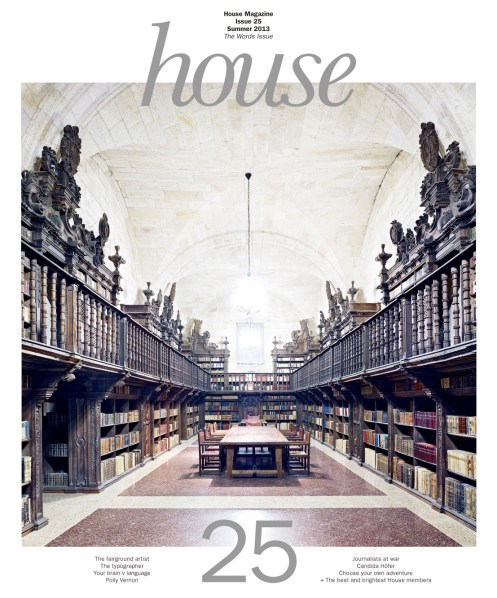
House Magazine, “Words” issue, number 25, contains an article on the “Rorschach Audio” project, featuring an interview conducted by Lore Oxford (alongside articles on and by Alison Carmichael, Bafic, Candida Höfer, Curtis Kulig, Damian Barr, Ewen Spencer, Four Corners Books, Francesca Gavin, Henrik Kubel, Ian Livingstone, Laura Bushell, Polly Vernon, Russell Thomas, Sarah Kim, Scott King, etc – special thanks by the way to Lore Oxford, Justin Quirk and Robin Mellor). The article was edited for length, so here’s the original Q&A (posted below), and, while the printed magazine’s been out for some time, the digital version’s just gone on-line now. Also Lara Cory, editor of the excellent Music Without Words & Fifteen Questions websites, posted an article inspired by the “Rorschach Audio” talk at The British Library, check ’em out…
Soho House magazine PDF (scroll down) – http://tinyurl.com/j52mysg
http://musicwithoutwords.com/2013/07/31/the-language-of-listening
LO: Please define your research and what you do with Rorschach Audio
JB: Most histories of audio recording technology start with early mechanical inventions – extraordinary machines like Édouard-Léon Scott de Martinville’s Phonautograph and Thomas Edison’s Phonograph etc, and, at the time of writing, Wikipedia for instance locates the prehistory of audio recording in early musical notation * – in musical scores, and in musical automata. It’s always possible someone’s going to improve the Wikipedia article, however, to paraphrase Aristotle’s “Poetics”, written languages – letters and words – are based on symbolic visual representations of indivisible sounds – so, firstly, all literature and poetry are forms of sound art, and secondly the earliest form of sound recording technology was not in fact a machine but was written language. If you consider letters and words as forms of technology, then the machine that reproduces the sounds those words represent is biological – it’s ourselves. In the human context the interpretation of sounds can be as imperfect as their reproduction, and the central metaphor here is that the way we interpret sounds has an imaginative aspect – the idea is that, particularly in noisy environments, we project meaning onto words and sounds in much the same way that viewers project images of faces, animals, ghosts, angels and monsters etc onto the symmetrical ink-blots famously used by the Swiss psychiatrist Hermann Rorschach. In fact, as the “Rorschach Audio” book points out, analogies between the interpretation of sounds and of ambiguous visual images go back at least as far as Leonardo da Vinci – what no-one seems to have done before this project was to try to address the full ramifications of those analogies, and it’s those ramifications that the Rorschach Audio project attempts to explore.
LO: What drew you to this subject matter?
JB: In the mid-1990s I started exhibiting sound art and recording electronic music under the name Disinformation, working primarily with radio recordings of electrical noise from sources like the sun, lightning and the National Grid. Within arts circles, there was and still is considerable interest in a form of parapsychology known as Electronic Voice Phenomena or EVP research, which is based on the idea that recordings of stray radio chatter – the usually very quiet and often highly distorted voices that occasionally intrude on tape recorders, PA systems and hi-fi equipment – are literally recordings of voices of ghosts. EVP research enjoys a significant cult following in the broader community and in the arts, with a number of very high profile contemporary artists exhibiting projects, which at worst take a totally credulous approach, at best an uncritical approach, to the factual claims made on behalf of EVP. “Rorschach Audio” started out as a series of lectures and articles which demonstrated how, ink-blot style, distorted and indistinct voice recordings can be mis-interpreted as being personally meaningful, and explained why EVP research isn’t scientific just because it makes use of technology. So, the original motive was to address misconceptions that were surprisingly commonplace in the arts, although since then the remit’s expanded considerably – ambiguities of hearing have had a significant influence on literature, and even on legal history for instance.
LO: Why did you chose to study the sensory perception of sound as opposed to the other senses?
JB: Legend has it that hi-fi sales personnel are trained to size-up customers in terms of whether they’re fundamentally a visually or a sound-oriented person, whether to sell them a hi-fi on the strength of its appearance, or on the strength of its sound, and I guess I’m slightly more sound-oriented. Other reasons are that, while there are literally thousands of books dealing with optical illusions and with psychology of visual phenomena etc, there are perhaps only a few hundred dealing with equivalent aspects of hearing, and when you consider that capital punishment for murder was abolished in the UK, in part because of disagreement about the interpretation of the words “Let him have it” in the Craig & Bentley shooting in 1952, and if you consider the importance of communicating clear speech in Air Traffic Control for instance, it seems clear that an informed understanding of the factors that influence hearing and mishearing can be extremely useful. Having said that, I also exhibit artworks which produce visual illusions.
LO: Are there any previous studies in this field, which inspired you to launch Rorschach Audio?
JB: There are hundreds, possibly thousands of scientific papers which deal with aspects of hearing like, for instance, the well-known Cocktail Party Effect. As most readers will probably be aware, it’s much easier to follow a conversation in a noisy social gathering, than it would be to follow the same conversation if it’s played-back from a tape recording. The difference is that during the party listeners make use of directional, sound-locating faculties to help isolate and extract a speaker’s voice from the surrounding hubbub, and also use an element of lip-leading; what people might not be aware of however is that the core research on the Cocktail Party Effect was sponsored by the American military, with a view to improving Air Traffic Control. “Rorschach Audio” cites alot of formal research, but also brings together a previously I believe unprecedented collection of anecdotal material, which describes similar phenomena playing-out in other real-world environments – from people hearing illusions of words in sounds of steam trains and ringing church-bells, to Surrealist author Raymond Roussel deliberately mishearing words as the basis for plotting his extraordinary novels. Probably the single most important source was a memo about interpretation of poorly-recorded voices that was circulated within the BBC department, that, during WW2, monitored foreign radio broadcasts for the War Office and for Winston Churchill etc. The author of that memo was BBC Monitoring Service supervisor Ernst Gombrich, and the understanding of psychology that he developed during WW2 had a critical influence on the book “Art & Illusion”, which Gombrich wrote in 1960, and which is arguably the most important work of visual arts theory ever published.
LO: What does the future hold for Rorschach Audio? Is their a specific goal you’re working towards?
JB: Rorschach Audio started-out as a not-for-profit, essentially zero-budget project, I went on to write-up one version of the research for an academically peer-reviewed journal published by The MIT Press, and, largely on the strength of that, The Arts & Humanities Research Council sponsored a 5-year research project at The University of Westminster and at Goldsmiths College. It’s always been an opportunity-driven project, however I’m always interested in exhibiting more Rorschach Audio artworks and it would be great to publish a more comprehensive version of the book, as there’s still a huge amount of as-yet unpublished research material.
LO: I heard that Noam Chomsky commented on Rorschach Audio?
JB: I sent The MIT Press article to the psychologist and author Steven Pinker, and to Noam Chomsky, the philosopher and linguist, followed by copies of the book. Steven Pinker described the project as “fascinating work” and Noam Chomsky described it as “intriguing”, which, even if he was just being polite, is pretty good considering he’s the most famous living philosopher in the world… I was very flattered just to get a reply. I also received a nice letter from Indu K Mallah, who’s a wonderful Indian author & tribal rights activist, quoted at some length in the book. Just working out how to contact her was a project in itself, which went as far as studying satellite photos on Google Earth to try to work-out her actual street address to send the book.
* This claim is still correct as of 14 Oct 2013
Finally thanks also to everyone who came to the Disinformation concert and “Rorschach Audio” talk at ERTZ#14 in Bera and Donostia (San Sebastian) in the Basque Country, and came to the performance at Portland Sculpture & Quarry Trust. Special thanks to Xabier Erkizia, Jose Luis Espejo, Mikel Nieto, Xavier Cejudo, Marcello Liberato and Natalia Barberi, and to Peter Lewis and Makiko Nagaya.
Related
From → Uncategorized
I cannot thank you enough for the post.Really looking forward to read more. Keep writing.